


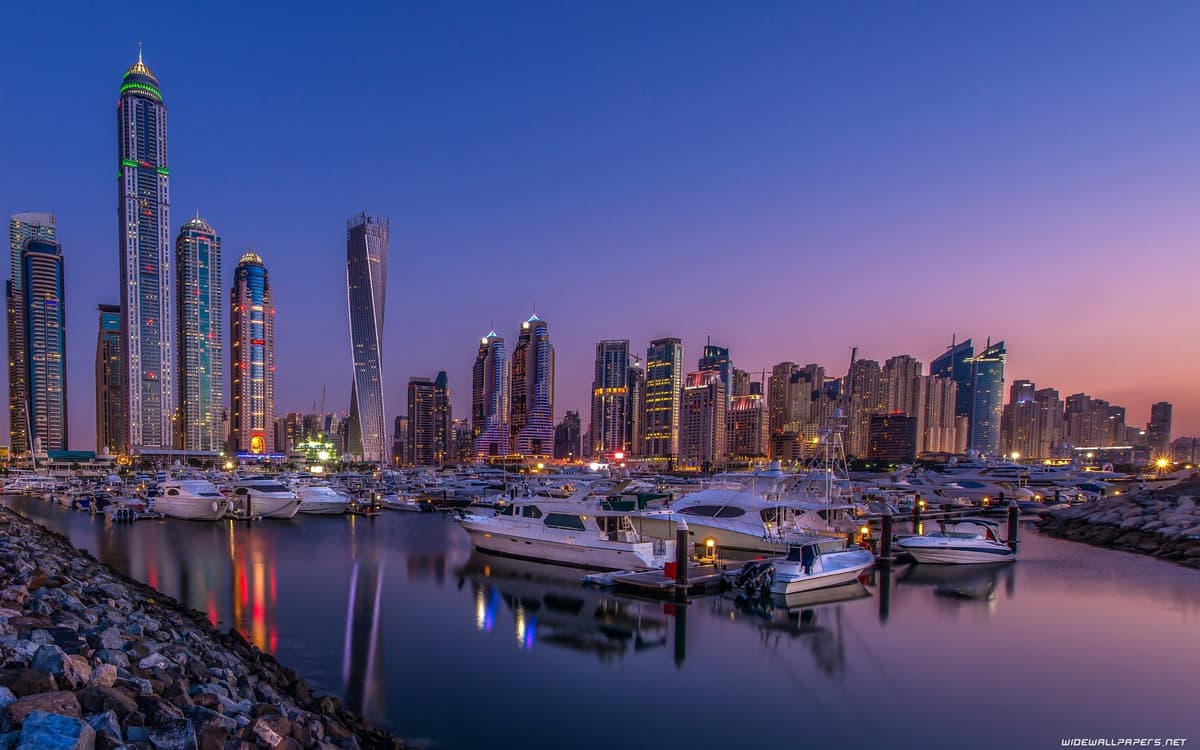
Dubai welcomed 869,000 international overnight visitors in August 2026 alone — its strongest monthly performance since February.
That's not a number most people expected, given the regional challenges earlier in the year.
Hotel occupancy tells a similar story. Rates climbed from 53.9% in July to 58.0% in August, then jumped to 67.2% by September — a recovery pace that's outpacing most global destinations.
Most people planning a Dubai trip right now are either:
- Unsure whether visitor numbers have actually bounced back
- Wondering if hotel prices are higher or lower than usual
- Not sure which months offer the best balance of value and availability
This guide breaks down the real numbers behind Dubai's 2026 tourism performance, what's driving the recovery, and whether this is actually a smart time to visit — based on occupancy data, pricing trends, and seasonal patterns.
Dubai Tourism Numbers Break Records in 2026
The recovery story is backed by hard numbers.
Dubai welcomed 6.97 million international overnight visitors between January and August 2026 — building on the 19.59 million recorded across all of 2025. Growth momentum has been consistent, with each month adding to an already strong base.
If you're planning a trip now, you can also explore ClickToGuide's things to do in Dubai to see the attractions and experiences available for visitors.
How Many Tourists Visited Dubai in August 2026
August marked the strongest monthly performance since February, continuing double-digit month-on-month growth that started in March.
Hotels across the city recorded 21.61 million occupied room nights in the first eight months of the year alone. That's not a short-term spike — it reflects sustained demand across the accommodation sector.
👉 Important Insight: August's performance brought international visitor confidence back to pre-conflict levels — a milestone that took just five months to reach.
International Visitors by Source Region Show Diversified Growth
What Most People Don't Realize: Dubai's visitor base is spread across multiple regions — no single market dominates.
Here's the breakdown for January to August 2026:
- Western Europe: 20% of all arrivals
- South Asia: 17%
- GCC countries: 16%
- CIS and Eastern Europe: 14%
This mirrors 2025's distribution closely. Western Europe sent 4.1 million visitors that year — 21% of the annual total. GCC and MENA markets combined for 26% of arrivals, contributing 2.99 million and 2.17 million respectively. South Asia and CIS/Eastern Europe each added 2.89 million, while North East and South East Asia contributed 1.85 million.
👉 Why this matters: A diversified source market means no single regional disruption can derail overall performance. Dubai's visitor base is built to absorb shocks.
Dubai Tourist Arrivals Month-by-Month Pattern
January 2026 opened with 2.00 million visitors — a 3% increase over January 2025.
That momentum came off the back of December 2025, when Dubai crossed the 2 million mark in a single calendar month for the first time ever. December recorded 2.04 million international overnight visitors, representing 6% year-on-year growth.
👉 Key Takeaway: December 2025's historic milestone set the tone for 2026. The city entered the year with its strongest-ever monthly performance already on the books.
Dubai Hotel Occupancy 2026 Reaches Strongest Performance
The headline number here is straightforward: hotel occupancy climbed from 36% in March to 66% by August 2026. That's a 30-percentage-point recovery in five months.
By September, it reached 67.2%.
Hotel Occupancy Climbs from 36% to 66% in Five Months
August's 66% occupancy represented 89% of what Dubai recorded in the same month in 2025 — a strong signal that international demand has largely returned.
The first half told a harder story. H1 2026 averaged 56.4% occupancy across 727 hotel establishments and approximately 152,139 rooms.
Here's how different segments performed during H1:
✔ Upper Midscale — strongest performer at 65.7% occupancy
✔ Midscale — 63.7%
✔ Upscale — 58.7%
✔ Upper Upscale — 51.8%
✔ Luxury — 51.2%
👉 Key Insight: Budget and mid-range segments outperformed luxury properties during the recovery period — a pattern that typically reverses once international confidence fully stabilizes.
Hotels recorded 21.61 million occupied room nights across the first eight months of the year, reflecting consistent underlying demand even through the weaker months.
Dubai Hotel Inventory Approaches 149,000 Rooms
Room inventory approached 149,000 by end of August 2026.
Several properties have begun renovation projects rather than rushing new supply additions. This reflects near-term caution around execution — not weakening confidence in Dubai's longer-term tourism fundamentals.
ADR Holds Steady Despite Occupancy Pressure
👉 What Most Visitors Don't Realize: Hotels didn't slash prices to fill rooms. Average daily rates held above AED 700 during H1, declining by just 7% year-on-year to AED 701 — despite a 30.3% drop in occupancy.
Operators maintained pricing discipline throughout. That matters for anyone planning a 2026 trip — rates stayed resilient even when demand was weakest, which means peak season pricing will likely hold firm as occupancy continues climbing through year-end.
Why Is Dubai Tourism Growing in 2026
The recovery didn't happen by accident. Several concrete factors kept Dubai's tourism sector moving forward despite regional headwinds earlier this year.
Government Support Package Strengthens Tourism Sector
Dubai moved quickly when it mattered most.
An AED 1 billion economic incentive package launched in April 2026 allowed hotels to postpone 100% of sales fees and the Tourism Dirham for three months. A second package worth AED 1.5 billion followed in May.
Total targeted government support: AED 2.5 billion.
👉 Important Insight: This wasn't just financial relief — it gave operators the breathing room to maintain service quality without slashing rates. That's why average daily rates held above AED 700 even during the toughest months.
The timing proved critical. The liquidity boost came right before the recovery curve started climbing — which is exactly what you see reflected in August and September's occupancy numbers.
Dubai's Source Market Mix Remains Consistently Diverse
No single market drives Dubai's visitor numbers. That's by design.
Western Europe, South Asia, GCC countries, and CIS markets each contribute substantial volumes independently. When one region faces disruption, the others absorb the gap.
👉 This broad international base is what allowed DET and partners to sustain demand across both established and emerging markets — directly supporting the Dubai Economic Agenda D33 targets.
Arabian Travel Market 2026 Brings Global Travel Community Together
ATM 2026 opened on September 14 at Dubai World Trade Center — a strategically well-timed moment given where occupancy figures were heading.
Key numbers from ATM 2026:
- 115+ co-exhibitors across hotel groups, attractions, and aviation partners
- 300+ international travel trade professionals hosted through the Buyers Program
- 40+ countries represented through the Hosted Buyers Program
👉 Pro Tip: Events like ATM don't just generate buzz — they rebuild trade relationships and booking pipelines that feed into forward occupancy numbers for the following season.
Strategic Partnerships Drive Visitor Confidence
DET locked in global partnerships with Marriott International, Visa, Hyatt, Premier Inn, and Amadeus back in 2025.
Those partnerships are delivering in 2026 — strengthening distribution channels, expanding reach across traveler segments, and reinforcing Dubai's positioning as a premium destination worth booking despite earlier uncertainty.
Is Dubai a Good Time to Visit in 2026?
Your timing shapes everything — the price you pay, the crowds you face, and the weather you experience.
The good news: with year-end occupancy forecasts sitting between 60.4% and 66.2%, rooms are available. But the right window depends entirely on what you're optimizing for.
Best Time to Visit Dubai Based on 2026 Tourism Data
For a more detailed breakdown of weather and travel conditions throughout the year, see ClickToGuide's best time to visit Dubai month-wise guide.
✔ Peak Season: November to March
- Temperatures range between 20–28°C
- Ideal for beaches, desert safaris, and outdoor activities
- Hotel prices are at their highest
- Popular properties fill fast
👉 If you're visiting during this window: Book four to six months in advance to lock in better rates before they increase.
Dubai's cooler months are also popular for outdoor experiences such as a Dubai desert safari.
✔ Shoulder Season: April–May and September–October
- Warm enough for beaches and pools
- Noticeably fewer crowds than peak months
- Hotel prices drop compared to November–March
- Better availability across mid-range and luxury properties
👉 Pro Tip: Booking two to three months ahead works well during shoulder season. This is the sweet spot for value-conscious travelers who don't want to sacrifice weather.
✔ Summer: June to August
- Temperatures exceed 35°C with high humidity
- Hotels offer significant discounts to attract demand
- Luxury properties become accessible at reduced rates
👉 Important Insight: Summer is not for everyone — but if heat doesn't bother you, this is when Dubai's best hotels are available at their lowest prices.
For travelers looking specifically for warm-weather activities, ClickToGuide also has a guide to things to do in Dubai in summer.
Which Season is Right for You?
✔ Choose Peak Season (November–March) if:
- You want ideal weather for outdoor experiences
- You're visiting for Dubai Shopping Festival or New Year's Eve
- You're comfortable booking well in advance
❌ MAYBE NOT — if:
- You're on a tight budget and flexibility matters more than timing
- You haven't booked four to six months ahead — rates will be significantly higher
✔ Choose Shoulder Season (April–May or September–October) if:
- You want a balance of good weather and lower hotel rates
- You prefer fewer crowds at major attractions
- You have two to three months to plan ahead
✔ Choose Summer (June–August) if:
- Budget is your primary concern
- You want access to luxury hotels at off-season pricing
- Indoor attractions and mall experiences are your focus
What to Know About Hotel Availability Right Now
Year-end occupancy is forecast between 60.4% and 66.2% — meaning availability exists across most of the city.
That said:
- Peak season still requires advance booking for popular properties
- Major events like Dubai Shopping Festival, New Year's Eve, and international conferences drive rates up across all categories
- For event-period travel, book six to nine months ahead
Dubai's Travel Infrastructure in 2026
Airlines have restored approximately 85% of pre-conflict capacity, with further additions scheduled.
Additional confidence measures in place:
- Emirates introduced conflict-related travel cover in June
- Etihad and Abu Dhabi's tourism department added complimentary medical insurance for international visitors
- New attractions including Disneyland Abu Dhabi and the Quantum Dome Project are opening by 2026
👉 Bottom Line: Dubai's travel infrastructure is largely back. The question isn't whether to visit — it's when, and how far ahead you book.
Check Live Availability Before You Finalise Dates
Don't wait until your preferred window sells out — especially around major events and the peak November–March window.
👉 Check Live Hotel Availability for Your Dubai Travel Dates
Final Thoughts
The data is clear. Dubai's tourism sector has recovered faster than most expected — and 2026 is shaping up to be a strong year for visitors across every budget level.
Diversified source markets, AED 2.5 billion in government support, restored airline capacity, and a pipeline of new attractions have all contributed to a recovery that's reflected in real occupancy numbers — not just projections.
Is 2026 a good time to visit Dubai?
✔ YES — if:
- You want peak season weather (November–March) and can book 4–6 months ahead
- You're after value — shoulder seasons (April–May, September–October) offer solid weather with lower hotel rates
- You're a budget traveler willing to handle summer heat for significantly discounted luxury stays
❌ MAYBE NOT — if:
- You're planning last-minute travel during Dubai Shopping Festival or New Year's Eve — rooms at popular properties go fast
- You expect off-season pricing during peak conference and event periods
👉 Final Verdict: Popular properties fill quickly during high-demand windows. Check live availability now and lock in your dates before rates climb.
Key Takeaways
Dubai's tourism sector has demonstrated exceptional recovery in 2026, with visitor numbers and hotel performance reaching impressive milestones that signal strong momentum for the destination.
- Record visitor numbers: Dubai welcomed 869,000 international overnight visitors in August 2026, marking the strongest monthly performance since February with 6.97 million total visitors from January to August.
- Hotel occupancy surged dramatically: Occupancy rates climbed from just 36% in March to 67.2% in September 2026, demonstrating rapid recovery and strong underlying demand across the hospitality sector.
- Government support proved critical: Dubai's AED 2.5 billion economic incentive package allowed hotels to postpone fees during challenging months, enabling operators to maintain service quality without aggressive discounting.
- Diversified source markets create resilience: Western Europe (20%), South Asia (17%), and GCC countries (16%) lead visitor arrivals, ensuring no single regional market disruption can derail overall tourism performance.
- Strategic booking timing matters: Peak season (November-March) requires 4-6 months advance booking for best rates, while shoulder seasons (April-May, September-October) offer optimal balance of weather and value with 2-3 months notice.
The combination of restored airline capacity (85% of pre-conflict levels), strategic partnerships with global hospitality brands, and new attractions opening positions Dubai as an excellent destination choice for 2026 travelers across all budget segments.
FAQs
Q1. How many tourists are expected to visit Dubai in 2026?
Dubai welcomed 6.97 million international overnight visitors between January and August 2026, with August alone bringing 869,000 visitors—the strongest monthly performance since February. The emirate is on track for strong year-end performance, building on the 19.59 million visitors recorded in 2025.
Q2. Are hotel prices in Dubai dropping in 2026?
Hotel prices show resilience with average daily rates holding above AED 700 during the first half of 2026, declining by just 7% year-on-year despite earlier occupancy challenges. Summer months (June-August) offer significant discounts due to high temperatures, while peak season (November-March) commands premium rates. Booking 4-6 months in advance during peak season secures better rates.
Q3. What is driving Dubai's tourism growth in 2026?
Dubai's tourism growth stems from several factors: a AED 2.5 billion government support package that helped hotels maintain service quality, diversified source markets across Western Europe, South Asia, and GCC countries, restored airline capacity at 85% of pre-conflict levels, and strategic partnerships with global hospitality brands like Marriott, Hyatt, and Visa.
Q4. When is the best time to visit Dubai in 2026?
The best time depends on your priorities. Peak season (November-March) offers ideal weather with temperatures between 20-28°C but requires advance booking. Shoulder seasons (April-May and September-October) provide a balance of good weather and lower prices. Summer months (June-August) feature significant hotel discounts but temperatures exceed 35°C with high humidity.
Q5. What is Dubai's hotel occupancy rate in 2026?
Hotel occupancy in Dubai climbed dramatically from 36% in March to 67.2% in September 2026. By August, occupancy reached 66%, representing 89% of the city's occupancy levels from August 2025. Year-end forecasts project occupancy rates between 60.4% and 66.2%, indicating strong availability across the city's nearly 149,000 hotel rooms.